
The Phone Scam That Targeted a Local Grandfather And How to Protect Your Family From the Same Trap |
Seniors are targeted by scammers posing as federal agents. Here’s what every family needs to know to protect the people they love. |
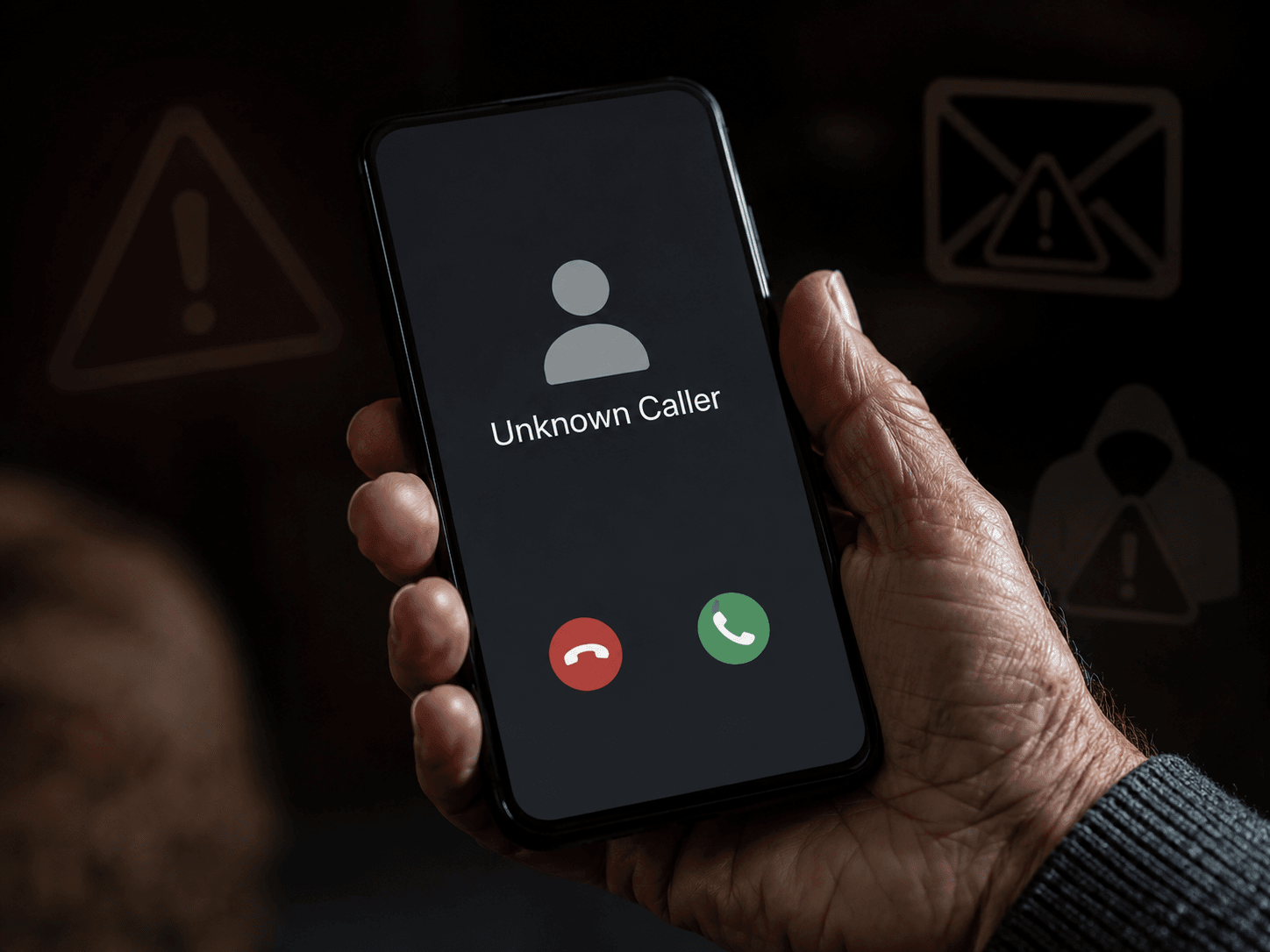
A few weeks ago, a daughter called about her mother.
The mother had been pulled into an online scam and had lost more than six figures. The money was gone. The family was now dealing with the tax fallout from those withdrawals. Then another call came in. This one was about a retired grandfather in our area.
The details were different. The pattern was the same.
Pressure. Secrecy. Fear. A demand to move money fast. The call from yesterdayHe was told his Social Security number had been compromised. Then he was transferred to someone claiming to be a federal agent. The story got darker by the minute.
He was told there was a case in his name involving guns, drugs, and serious criminal activity he had nothing to do with.
The callers sent fake-looking documents and images to make the story feel real.
They stayed on the phone with him for hours and repeated the same instruction again and again: do not tell your family.
By the time it was over, more than half a million dollars in life savings was gone.
He had been convinced to move money into gold as part of the so-called investigation. Why this worksThese scams do not succeed because people are foolish. They succeed because the criminals know how to create fear and force fast decisions.
Someone sounds official.
A crisis is created.
The victim is told not to tell family.
Then the caller pushes the target out of normal banking channels and into wires, gift cards, crypto, cash, or precious metals. It almost happened here too me!This is the part people need to hear: it can happen to almost anyone. Even people who deal with financial pressure and fraud issues for a living can get pulled in when the call sounds polished and urgent.
A couple of weeks ago, I got a call that sounded legitimate. The story was tight. The pressure felt real. They said my Google account was hacked and they needed to verify my account.
I started answering questions.
My wife stepped in and told me to hang up.
She was right.
Once I stepped back, the red flags were obvious.
That is exactly why families need a simple rule before the next phone call comes. The one rule every family needsNo one handles a financial or legal “emergency” call alone.
Hang up.
Call a trusted family member.
Then call the institution back using a number you look up yourself. Not a number given to you by the caller. What to tell your parentsKeep it plain.
One sentence can do a lot of work: If anything scary comes up about money, call me first. You will not be in trouble with me. If it already happenedMove fast.
Contact the bank or financial institution immediately and ask what can still be frozen, recalled, or flagged.
File reports with local law enforcement and the FBI’s Internet Crime Complaint Center at ic3.gov.
If identity theft is part of the situation, file a report at IdentityTheft.gov. For older adults and their families, one of the clearest resources is the U.S. Department of Justice’s National Elder Fraud Hotline: 833-FRAUD-11 or 833-372-8311.
It is available Monday through Friday from 10:00 a.m. to 6:00 p.m. Eastern.
And if part of the damage involves tax fallout from large withdrawals, tax notices, or retirement account issues, feel free to call our offices at 909-570-1103 or visit TaxDebtConsultant.com. Why this story matters hereMost community newsletters focus on the best parts of local life. That is still the mission.
But protecting neighbors is part of that same job.
Call your parents. Call your grandparents.
Tell them now: if any stranger on the phone tells them to keep a secret about money, hang up and call family first. |
0 Comments
Join the conversation
Be the first to comment
Share your thoughts above.